4WD Vehicle Service
Adelaide 4WD service vehicle is an ideal way to explore and discover. But maintain regular service schedules to keep it reliable and bring you home safely.
Four-wheel drives require more maintenance than traditional two-wheel drives due to their additional components, so you must refer to your owner’s manual when booking maintenance.
Engine
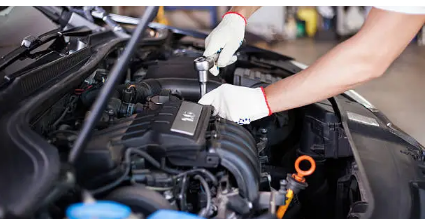
 Your vehicle’s engine is one of the most critical elements in keeping it running optimally, so regular 4WD vehicle service should be performed.
The core principle behind a car engine is that it consists of multiple rotating parts working together to generate power. The primary function of a machine is to move fuel through its various cylinders, ultimately providing that drive to your wheels.
A 4WD vehicle’s engine integrates the functions of both front-wheel drive (FWD) and rear-wheel drive (RWD) systems into one, distributing power to all four wheels. In turn, torque is sent to differentials attached to each axle.
It helps a vehicle remain more stable in low-traction situations like snow, mud or rocks. Furthermore, it makes traversing rugged terrain much simpler.
However, the extra weight and grip that 4WD vehicles offer in extreme driving conditions can lead to breakdowns or parts failure if used for extended periods. Therefore, a specialist Adelaide 4WD service repairer must regularly inspect your car before and after each off-road trip.
Another essential part of a 4WD vehicle is the transfer case, which connects the front and rear driveshafts to front and rear differentials. It helps split engine power 50/50 between them both.
The transfer case is also responsible for locking the differentials to maintain traction. It can be a dangerous and damaging operation, as it could result in severe damage to either the front axles or even the transmission itself.
Transfer Case
A transfer case is an integral component of a four-wheel drive vehicle, sending power to both front and rear axles through its transmission. It also permits drivers to select between two-wheel or four-wheel drive modes depending on terrain and road conditions they may encounter while driving.
Differential
The differential is an integral component of an Adelaide 4WD service vehicle’s drivetrain system. It allows the wheels to spin at different speeds, enabling your car to handle uneven road surfaces better. Without it, all four wheels would lock together and turn at the same rate.
It could be especially hazardous on slippery surfaces or in mud and snow. Furthermore, it puts undue strain on the car’s frame, suspension system, and other parts.
To solve this problem, engineers devised a way to split the engine’s torque into two distinct streams and send each to different wheels. It was an ingenious solution that made today’s differential possible.
Today, several types of differentials exist open, limited-slip and torque. Each has its purpose and distinguishes itself from the others.
Brakes
As time passes, your brake rotors may develop grooves and cracks. If these problems worsen, they could cause your rotors to squeal or wobble when applying the brakes. Resurfacing your rotors can help solve these issues by providing extra surface area for friction.
The driving you do and the environment in which it takes place can significantly shorten the life of your brakes. For instance, commuters who frequent city traffic or mountainous areas with frequent stops tend to wear out their rotors faster than those who primarily drive on highways with few stops.
Most 4WDs employ coil springs, the iconic curly type; however, leaf springs are also available and often found on off-roaders for their rugged terrain capabilities. Both types improve handling and ride quality, coils being more common for off-roading, while leaves offer greater load-carrying capacity.
Shock absorbers are an integral part of suspension systems, cushioning the impact of bumps and preventing bounce. Furthermore, shock absorbers help push wheels down for increased traction – decreasing the chance of losing control and rolling off the road.
Like any other vehicle part, suspension components will deteriorate over time and eventually need replacing. Experts suggest replacing them after around 4.5 years or 70 000 km, depending on your system type.
Suspension upgrades for vehicles with heavier loads or off-road driving are essential to take on more challenging tracks. They usually involve raising the suspension by 50mm and replacing standard springs with custom ones.